Stem cell collection and re-infusion procedures (Apheresis Therapy) is at the forefront of cancer and regenerative medicine.
Unfortunatly it is currently unable to be performed at Monash Children’s Hospital.
Leanne Byrom, Club President 2026-2027, in 2024 initiated a fund raising project to assist Monash Hospital start delivering Apheresis Therapy.
The project is being supported across Rotary District 9815 (South Eastern Victoria)
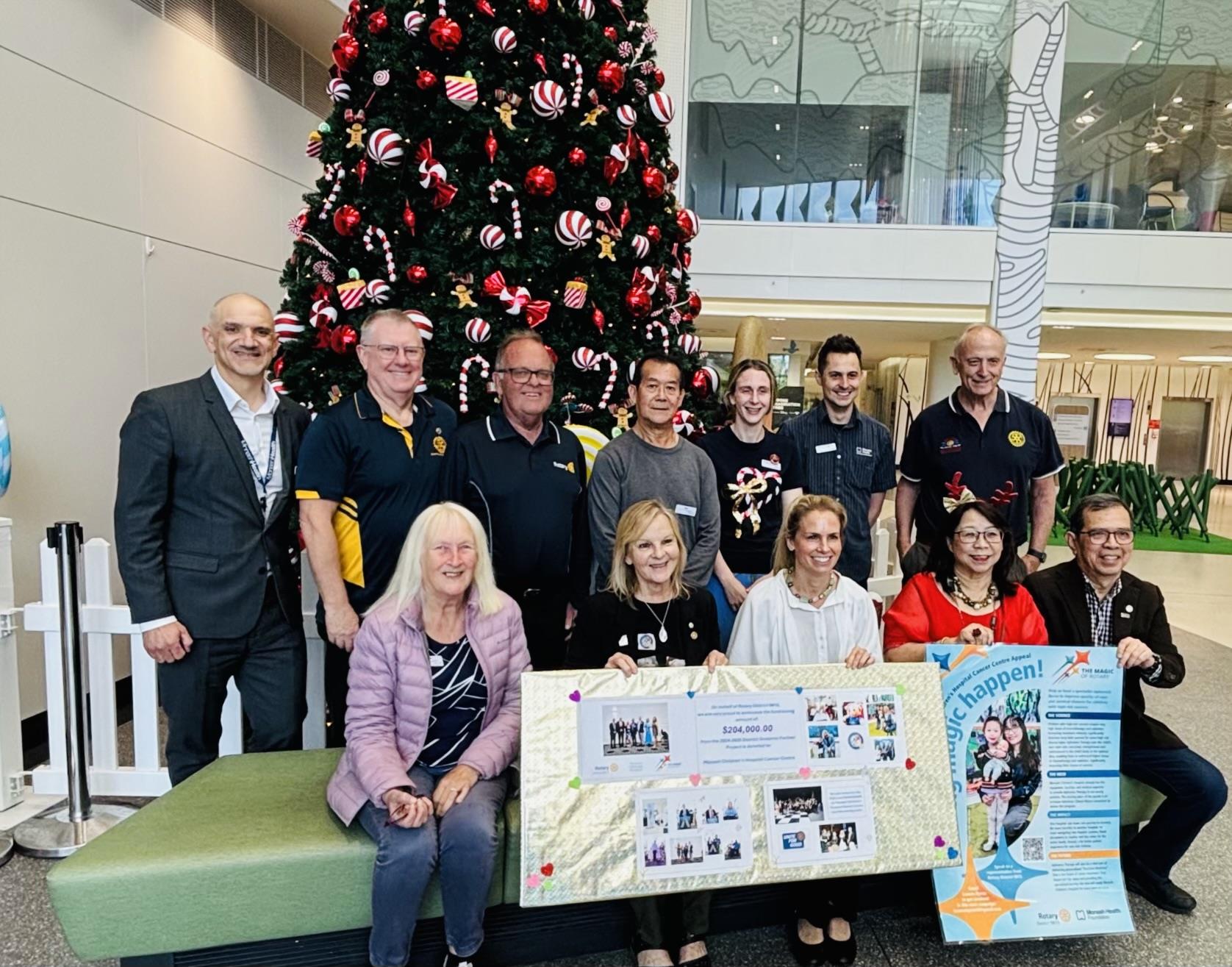
Rotarians at a presentation of a $204,000 cheque to the hospital.
What is the impact?
Starting this program at Monash Children’s Hospital will deliver the full range of therapies required to treat children with high risk and relapsed disease.
Apheresis and stem cell treatment is at the forefront of regenerative therapy and as the field evolves, indications and available treatments will increase.
To remain at the forefront of patient care, Monash Children’s Hospital must move to deliver this therapy or risk falling behind in this field.
Additional benefits at the hospital level include full control of patient care, improved staff specialisation and retention.
At a patient level the impact is profound.
Being able to receive all of your therapy at one centre with a team you know and trust assists children through very intensive therapy. Apheresis treatment and required investigations can be arranged as other treatments are in progress and at the family convenience.
The need for additional appointments, more travel and repeat review is removed, leaving children with more time to attend school, see friends and family, attend physiotherapy appointments.
Basic description of process:
In apheresis and stem cell therapies, whole blood from a patient is passed through a centrifuge machine which separates out the required cell component and returns the remainder of the blood to the patient circulation.
Stored cells can be frozen for later re-infusion or manipulated for fighting disease.
For patients with high risk solid/brain cancers or relapsed disease, stem cells are collected early in treatment or at the time of relapse.
Treatment can be intensified to improve survival outcomes and stem cells are re-infused to reduce the risk of severe infection and treatment complications.